
Decide how the table will be used
A Christmas coloring table can be an activity before dinner, a quiet corner during a gathering or a small craft session of its own. Decide which role it will play before choosing supplies. A drop-in table needs a clear starting choice and room to leave unfinished work. A longer session can include a simple paper keepsake. Neither needs every guest to make the same picture or finish at the same time.
Browse the Christmas collection and choose a small set with different kinds of shapes. A character, a decoration and a cozy scene give people useful variety. Print one sample of each before making copies, and check the smallest areas at paper size. The aim is an inviting table with a few clear choices, not a stack that makes choosing another task.
Offer three page choices with distinct starting points
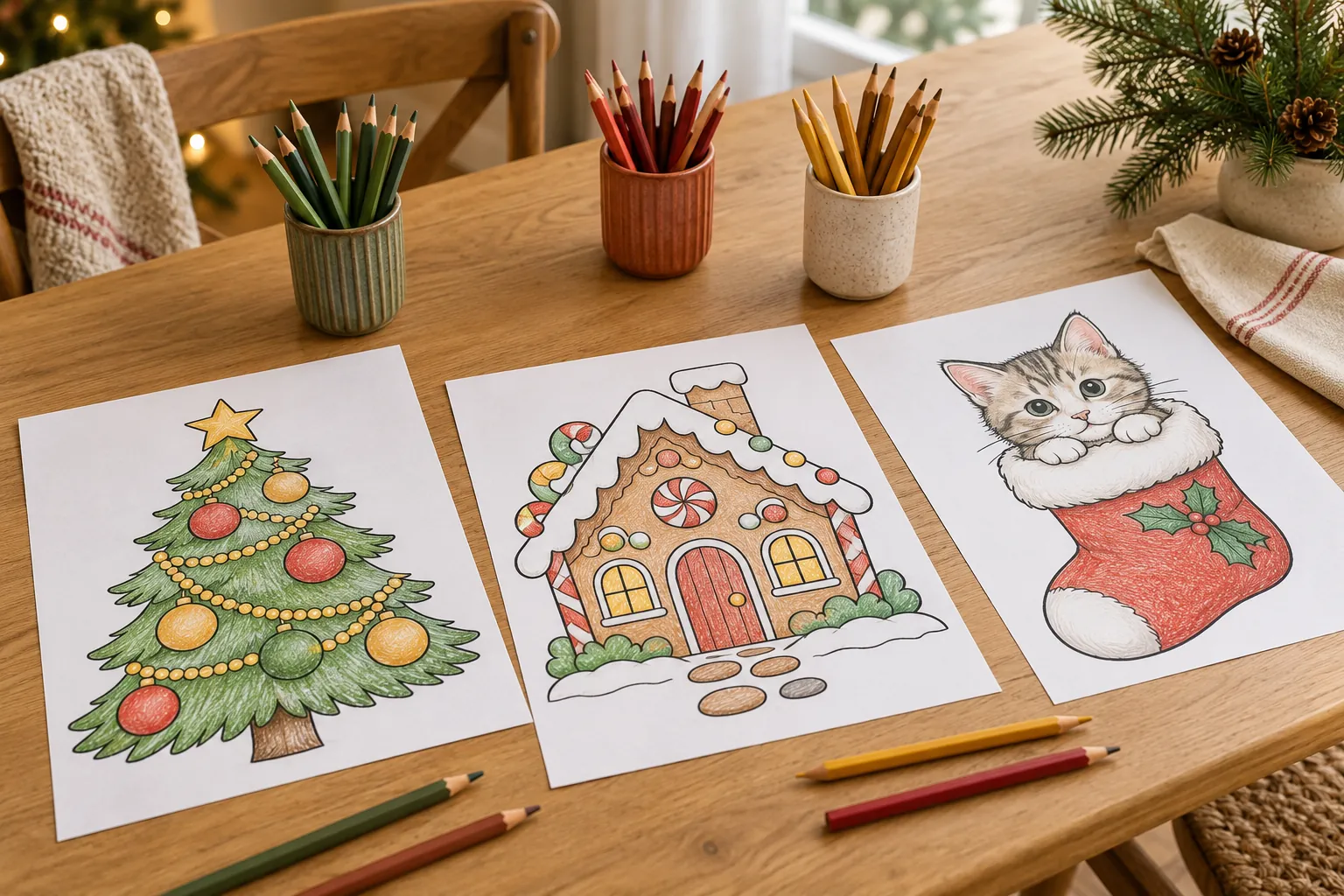
The Christmas ornaments page works for guests who want repeated shapes and independent color choices. The stocking kitten gives animal lovers a central character. A gingerbread house offers windows, candy and icing for someone who wants a more detailed scene. Place one sample of each where people can see it, with blank copies beneath or beside it.
Tell a new participant they can color one ornament, the kitten or only the house roof today. That small invitation is easier to accept during a busy gathering than a whole-page assignment. Keep a few plain sheets for testing colors or inventing a title. If several guests want the same design, make separate copies so nobody has to negotiate every color on a shared page.
Arrange supplies so sharing feels easy
Use small containers for crayons and pencils, with enough room between them for pages to lie flat. Put sharpened pencils where smaller details are offered, and provide wider crayons for broad shapes. If markers are included, test them on the actual paper and place backing sheets beneath the artwork. Keep drinks, serving dishes and candles away from the working surface. A craft table is simpler to manage when guests can reach a tool without moving another person’s picture.
A modest palette can tie the table together without dictating everyone’s result. Offer a few greens, warm reds and golden yellows, then include blue or lavender for guests who prefer a cooler winter scene. The small palette guide explains how to give those colors different roles. Let guests swap the choices freely; an unusual pink stocking can still belong in the gathering.
Use a short invitation instead of a finishing contest
For a drop-in activity, invite someone to color a favorite shape and write a small title on spare paper. A family might answer, “Who lives in this gingerbread house?” or “What is the kitten hoping to find in the stocking?” Those prompts let a picture become a conversation without requiring a craft lesson. A guest who prefers quiet can simply color, and a guest who leaves early can take the unfinished sheet home.
For mixed ages, choose a starting shape together rather than comparing completed pages. An adult can show a pencil technique on their own copy, while a child keeps control of theirs. The page-choice guide offers more ways to match spaces and tools to the person. Plan an easy stopping point so cleanup does not require hurried marks or an insistence that every background be filled.
Make a paper keepsake from a finished copy
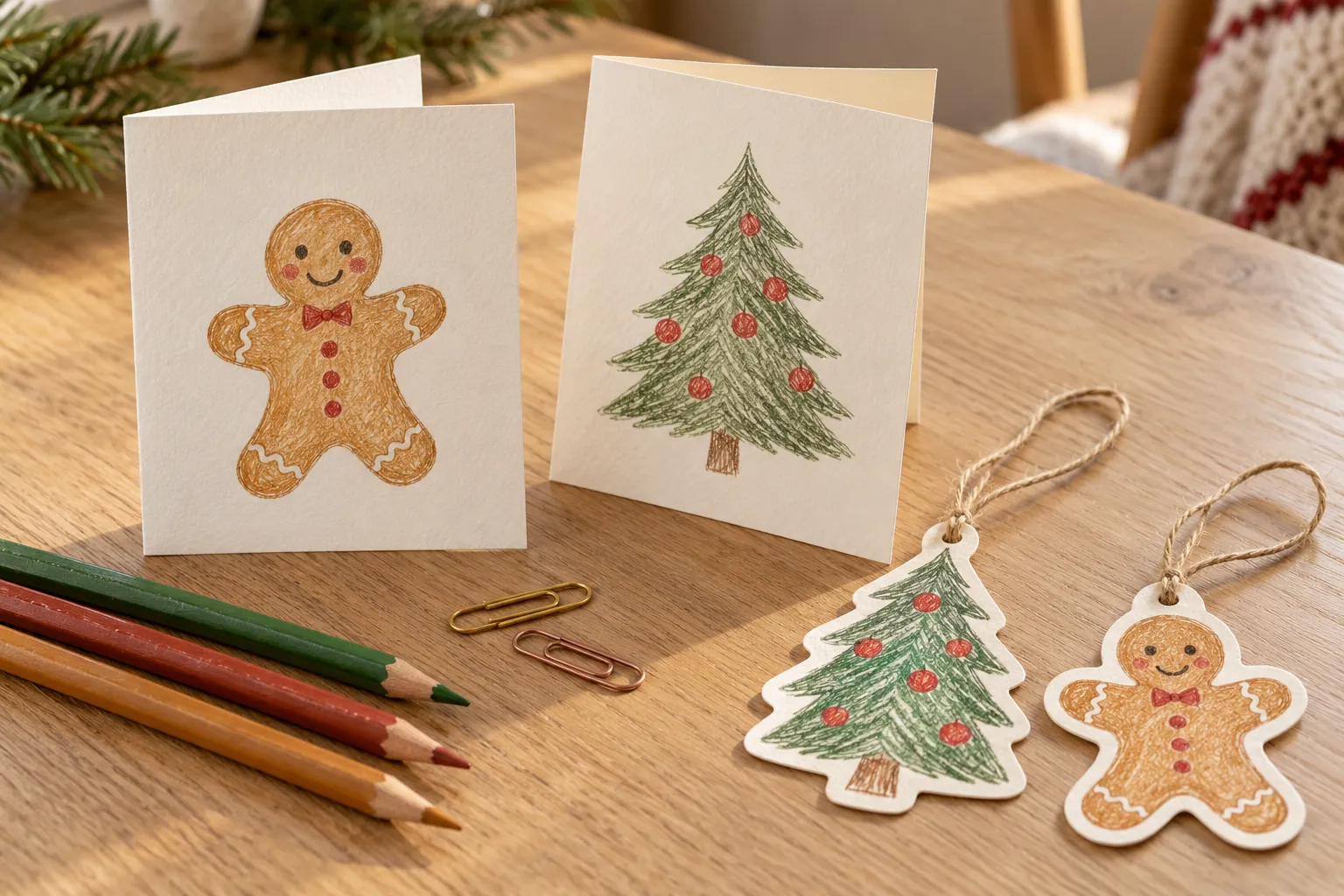
A colored page can become a card insert, a folder cover or a small display without elaborate materials. For a card, fold a separate blank sheet and attach a chosen piece of the colored print to the front, keeping the original digital file for future copies. Test the layout before cutting so the character or ornament is not cropped awkwardly. If children are participating, have an adult handle cutting when needed and use materials suitable for their age.
The Christmas wreath gives you a central decoration that can sit on a larger card, while one colored ornament can become a simple paper gift tag if it leaves room for a name. These are craft suggestions, not promises about exact cut lines in the artwork. If a page matters to its maker, keep it whole and use a fresh copy for experimenting.
Finish with a simple collection and cleanup plan
Set aside a flat folder or clearly marked place for guests to put their pages. Ask before displaying or keeping someone’s work, and offer an envelope or folder for taking it home. Collect pencils, separate usable backing sheets from ink-marked ones and save untouched prints for another session. Keep the chosen PNGs in a named local folder so next year’s preparation starts with the same clear options rather than another search.
If you want a new shared story, describe one uncomplicated holiday scene in the generator and review the result before printing it. Keep the familiar page choices available while trying something new. The most useful preparation remains small: a tested print, several comfortable tools, a reachable table and permission to color only the part that interests each guest. That leaves room for both conversation and a quiet moment during the celebration.