
Choose a small goal before you begin
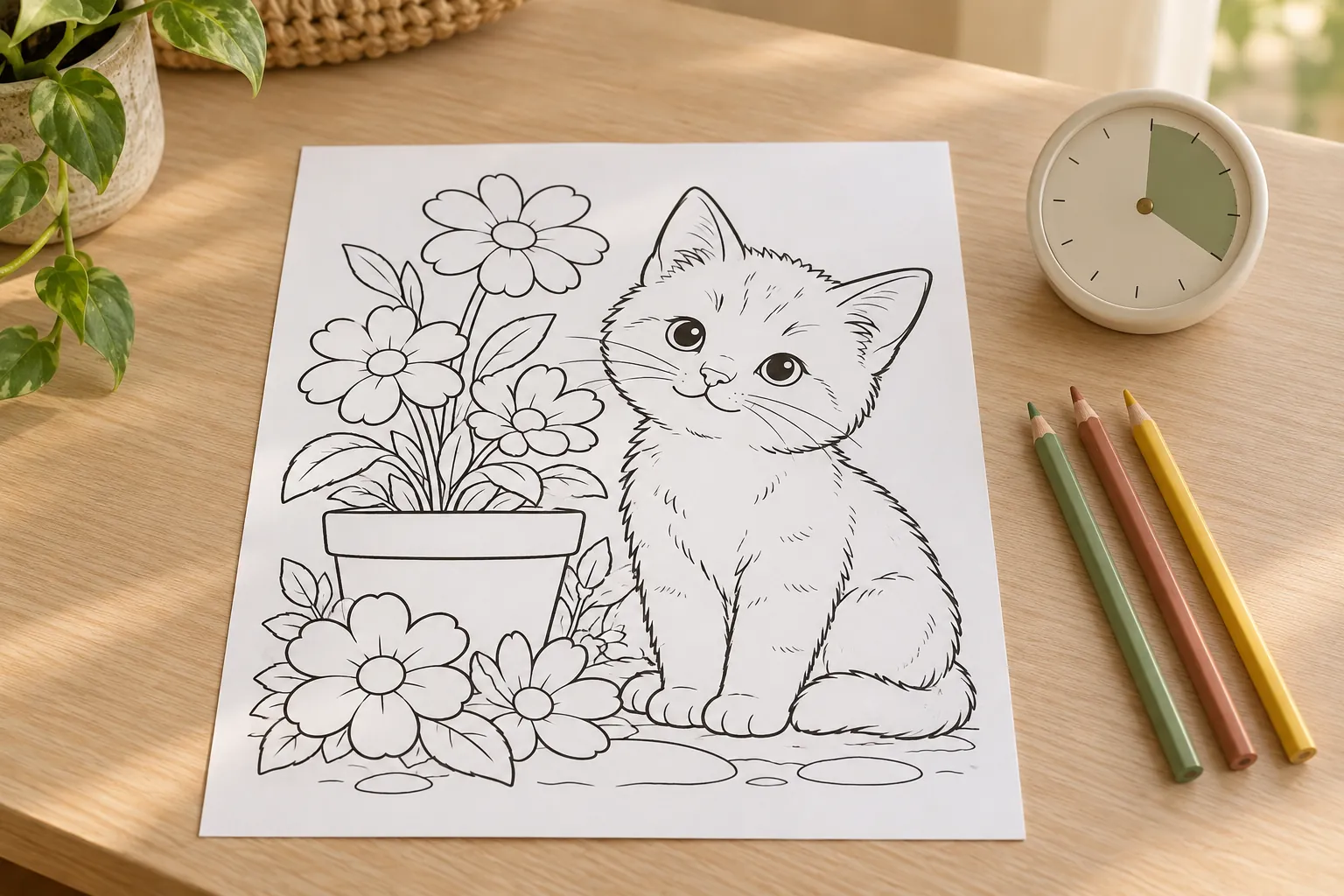
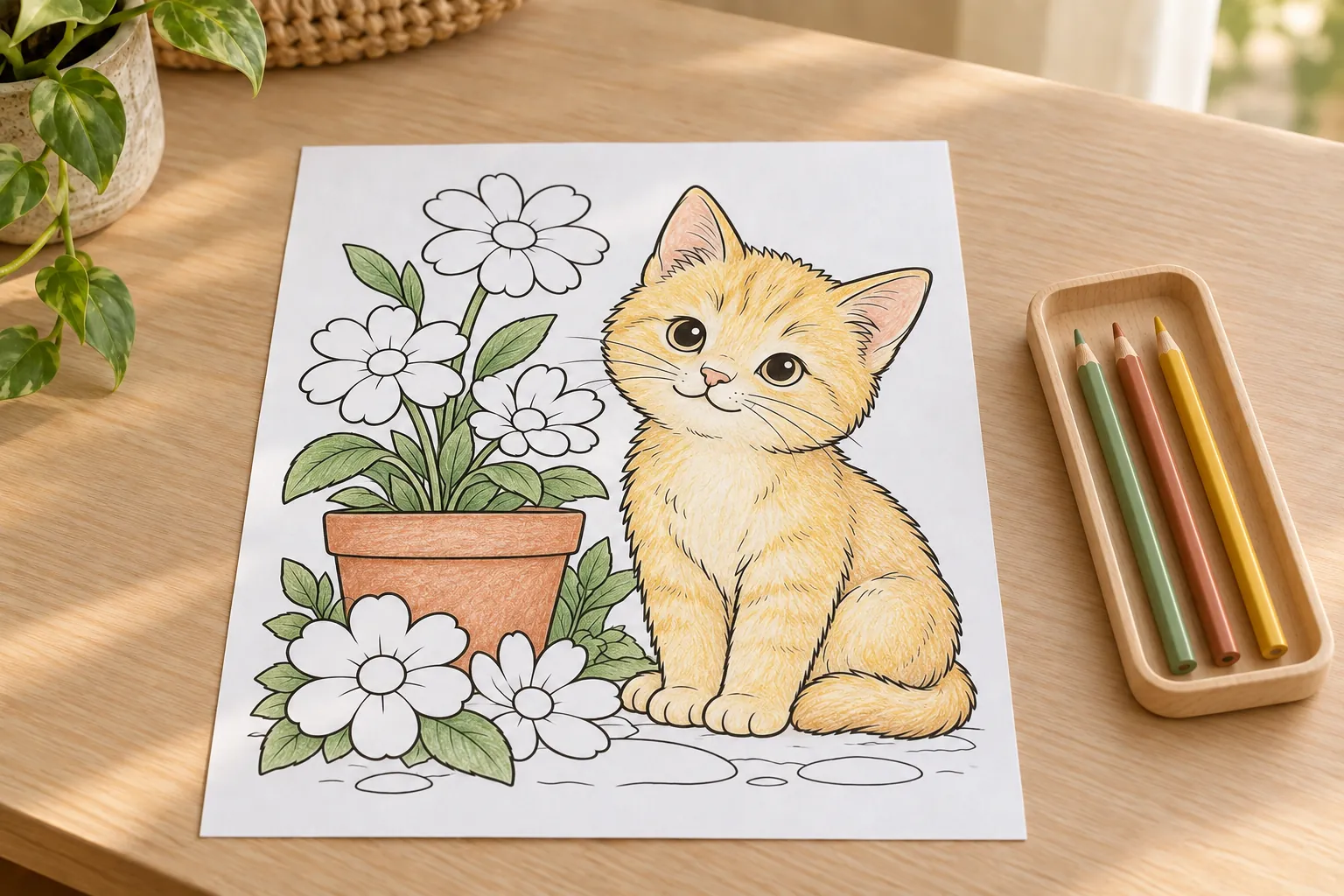
A twenty-minute session works best when the goal fits the time. Choose one character, one cluster of flowers or one repeated pattern rather than promising to finish a whole page. The kitten coloring page lets you choose the pot for one session and the kitten for another. Write the small goal on scrap paper if that helps: “three petals and the center” is something you can recognize when you reach it.
This routine is an invitation to make room for coloring, not a claim about its effects on health or concentration. You can shorten, extend or pause it according to the day. Keep the choice simple enough that setup does not consume the entire break. A familiar unfinished page often needs fewer decisions than a fresh picture, and returning to it can be just as satisfying.
Minutes zero to three: make a comfortable workspace
Put the page on a clear, dry surface with room for your forearm and the tools you plan to use. Choose a seat and light that let you see the small shapes without leaning close. Keep a backing sheet beneath markers and a spare sheet for color tests. A drink can sit nearby, but leave it beyond the paper’s edge so a small spill is less likely to reach the work.
Set out three or four colors and move the rest aside. Try a quick swatch, then place the chosen pencils in reach. If you enjoy a timer, set one that gives you a gentle reminder at the end; otherwise note the time. The purpose of these first minutes is to remove small interruptions, not to create a perfectly styled desk.
Minutes three to seven: start with a broad area
Choose a shape that feels easy to enter. Fill it lightly first, leaving room to deepen the color if you want. On the mushroom cottage, the cap can be a clearer starting area than the smaller doorway details. Turn the sheet when it gives your hand a more comfortable angle. You are allowed to choose a different area from the one you planned if the picture suggests it.
If deciding on color slows you down, repeat a shade already present on the page or use the first two pencils from your swatches. Avoid stopping to organize the whole pencil box. The small palette guide offers a more deliberate method for another day; this session only needs a workable choice that lets you make the first marks.
Minutes seven to fifteen: repeat, then add one variation
Continue with neighboring or repeated shapes so each new area does not require a fresh plan. In the pond scene, you might repeat one green on leaves and leave the water for a later session. After several shapes, add one variation: a darker edge, a lighter patch or a small accent. Notice whether the change is useful before repeating it everywhere. A single experiment fits a short session better than several new techniques.
For a child joining you, offer their own page and an equally small goal. Let them stop or change direction without making the timer a race. For adults, the same permission matters: marks outside an outline and unused white spaces do not cancel the session. Follow the part of the page that holds your interest, and leave the rest available.
Minutes fifteen to twenty: choose your stopping point
When the last few minutes arrive, finish the shape you are in or stop where you can clearly see what to do next. There is no need to squeeze in the entire background. Put the spare swatch sheet beside the page, then write one practical note such as “use the light green for the next leaf” or “try a blue edge on the pot.” That note removes a decision when you return.
Look at the page from a little farther away and notice one detail you enjoyed making. Avoid turning this into a score or a requirement to display the result. If you prefer a ready ending, initial a scrap-paper title card or put the page in a folder. A partial picture with a clear next step is a successful place to pause.
Make the next session easier to start
Return the selected pencils to their place and store the picture flat so it is easy to find. Keep the palette strip with it. If the next session will use a different room, a thin folder and a small pencil case can hold the essentials. You do not need a growing collection of supplies to repeat the routine; a page, comfortable tools and spare paper cover the basic decisions.
When you want a change of subject, browse the flower and nature pages and choose one main area before printing. Or describe a quiet, simple scene in the generator, then inspect the result and download it while available. The repeatable part is the sequence: settle in, begin broadly, try one variation, leave a useful note. The picture and colors can change whenever you like.